As the "heart" of the power system, the operation status of transformers is directly related to the safety and stability of the power grid. And measuring its DC resistance is a key step in determining whether the transformer winding is intact, whether the contact is good, and how the tap changer performance is. In the past, we may have relied on some outdated methods with low efficiency and inevitable errors in the results. Today, let's talk about how to measure the DC resistance of transformers more efficiently and accurately, making this work easy and reliable.
What is a transformer DC resistor?
Simply put, the DC resistance of a transformer refers to the resistance value of the transformer winding in the DC state. The magnitude of this value directly reflects the cross-sectional area, material purity, and contact condition of the winding conductor at the connection point. Generally speaking, the smaller the DC resistance value, the smaller the energy loss of the transformer, and the higher the efficiency.
What are the influencing factors?
There are several key obstacles to measuring the DC resistance of a transformer that need to be noted:
Temperature variation: The resistance value of a metal increases with increasing temperature and decreases with decreasing temperature. Therefore, accurate temperature recording and conversion to standard temperature values are crucial during measurement.
Poor contact: If there is oxidation, erosion, or looseness in the connection points of transformer windings, tap changer contacts, etc., it will cause an increase in resistance and affect the accuracy of measurement results.
External circuit: During the measurement process, if there is an unnecessary parallel circuit, it will divert the current and cause the measurement value to be low, resulting in misjudgment.
Equipment accuracy: The accuracy of measuring instruments directly determines the reliability of measurement results.
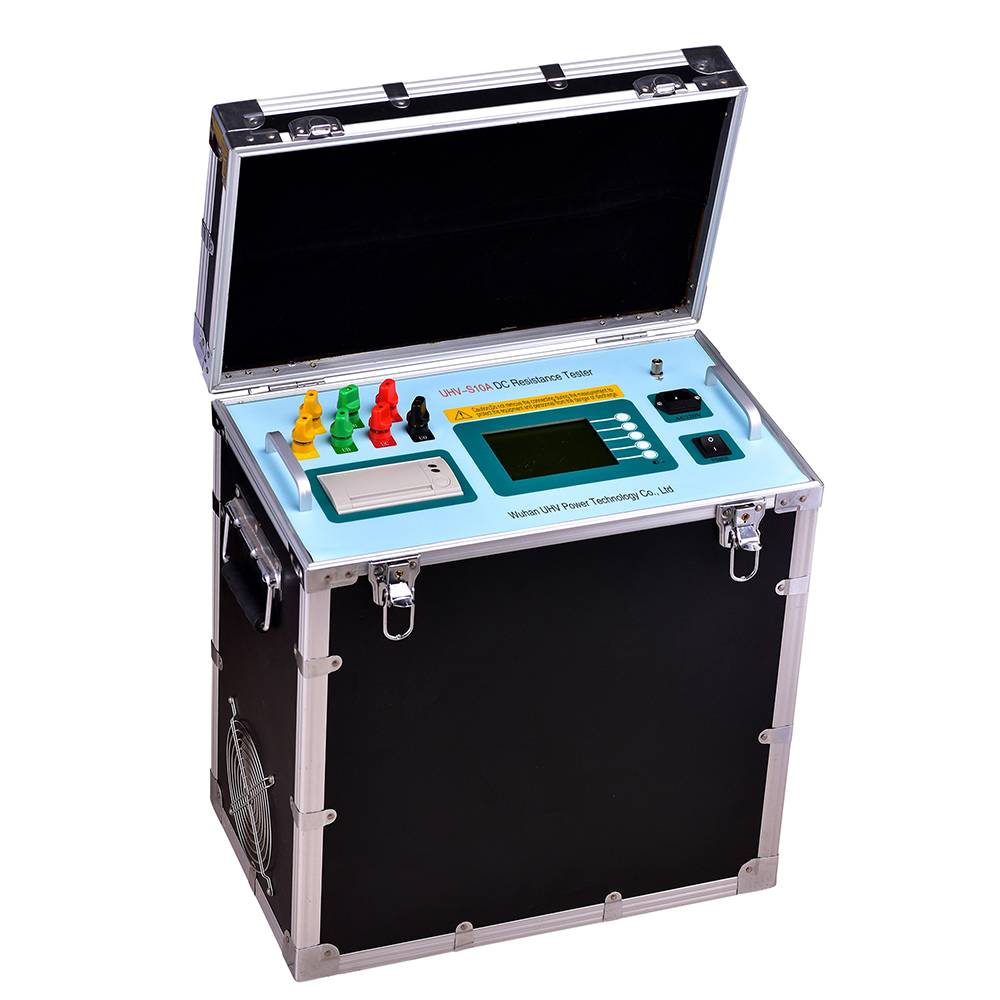
The artifact arrived: transformer DC resistance measuring instrument
In order to solve these problems, modern transformer DC resistance measuring instruments have emerged. This type of instrument can quickly and accurately measure the DC resistance of transformers, and many also have automatic temperature compensation function, saving tedious manual calculations. Wuhan UHV Power Technology Co., Ltd. has a profound technical accumulation in this field, and its products can meet the demanding on-site measurement needs, helping users complete their work more efficiently.
How to do better?
Choose appropriate instruments: Instruments provided by Wuhan UHV Power Technology Co., Ltd. usually have the advantages of high precision, fast measurement, and easy operation, and can cope with various complex working conditions.
Standardized operating procedures:
Pre check: Ensure that the transformer is powered off and carefully inspect the test wiring to avoid short circuits.
Environmental adaptation: Try to measure under relatively stable temperature conditions and record the temperature during the measurement.
Eliminate interference: Ensure that the tested winding is disconnected from other circuits to avoid measurement errors.
Multiple measurements: Conduct multiple repeated measurements on the same set of data, take the average, and improve data accuracy.
Temperature conversion: Use formulas to convert measured values to standard temperatures (such as 20 ℃) for data analysis and comparison.
Pay attention to details: Measuring the DC resistance of a tap changer in different gears can effectively evaluate its contact state.
Measurement and correlation of transformer DC resistance
This measurement work is not only closely related to the winding performance of transformers, but also an important means of power equipment status monitoring and fault diagnosis. By regularly measuring DC resistance, we can promptly identify potential quality issues, prevent equipment damage, and ensure the stable operation of the power grid.
Frequently Asked Questions (FAQ)
Q: Why does the measured value of transformer DC resistance change with temperature? A: The electrical resistivity of metals is positively correlated with temperature. As the temperature increases, the electrical resistivity also increases, leading to an increase in the resistance value.
Q: Are there any special requirements for the ambient temperature during measurement? A: Try to measure in an environment with minimal temperature changes and record the measured temperature for temperature correction.
Q: What other issues can DC resistance measurement reflect besides winding resistance? A: It can also reflect the quality of the contact points of the tap changer, whether the lead connections are tight, and so on.
Q: What should I do if I find that the DC resistance value is abnormally high during the measurement process? A: Check whether the connection points are loose or oxidized, and whether the contacts of the tap changer are burned. If necessary, contact professionals for handling.
Q: What is the improvement in measurement efficiency when using instruments from Wuhan UHV Power Technology Co., Ltd? A: Instruments usually have functions such as fast charging, fast discharging, automatic reading, and automatic temperature compensation, which can significantly shorten measurement time and improve work efficiency.