Have you ever been curious about how seemingly simple metal connections ensure equipment safety and maintain system stability at critical moments? In the fields of power and electronics, the significance of the word 'grounding' is self-evident. To ensure the safety of the grounding project, an important "guardian" - the grounding continuity meter is indispensable.
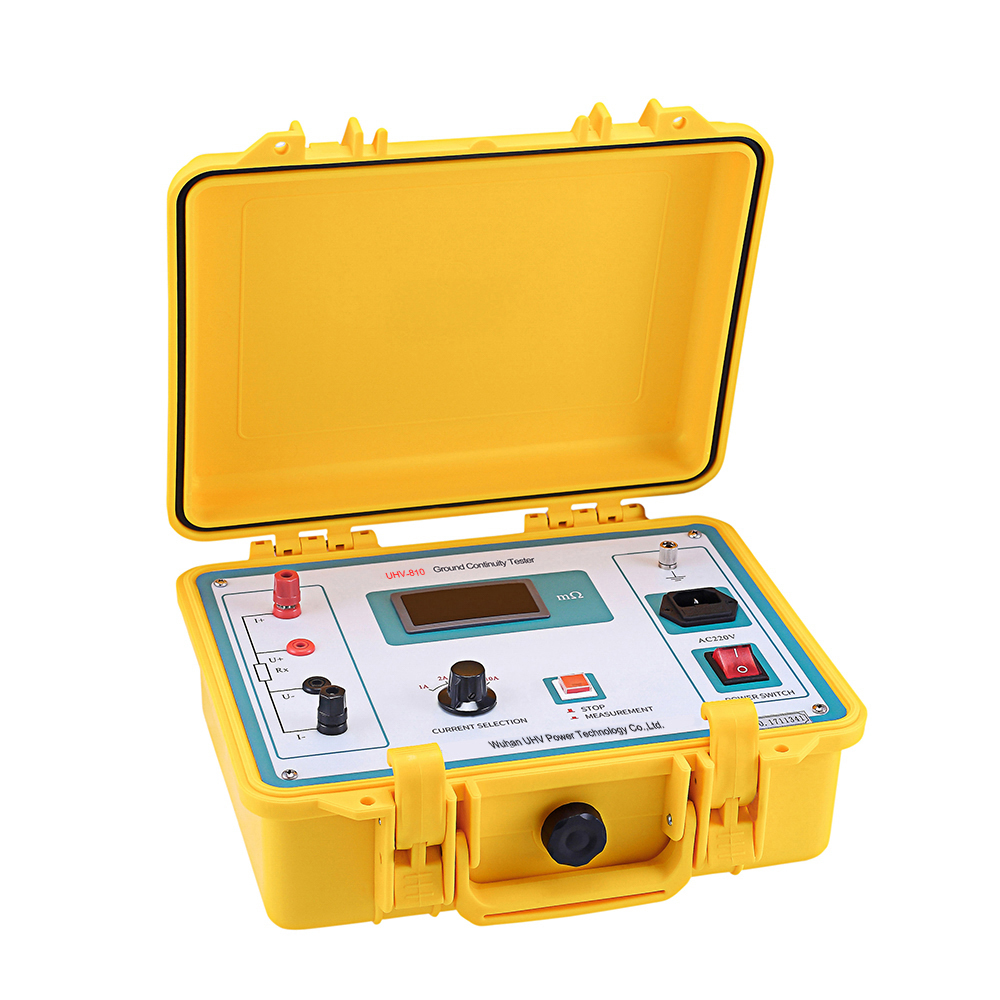
What is a grounding continuity meter?
Simply put, a grounding continuity meter is an instrument specifically used to measure whether the electrical connection of a grounding device is reliable and whether the resistance meets the standard. Its core function is to detect the conductivity of the grounding circuit, that is, to see if the current can smoothly pass through the grounding wire and reach the ground. Imagine if the grounding wire is broken or the connection is loose, then it loses its meaning and may even become a safety hazard.
What are the factors that affect grounding conductivity?
The grounding effect is not fixed and is influenced by various factors, including:
The quality of grounding materials: Materials with poor conductivity will increase resistance.
The contact resistance of the connection point: whether the bolt is tightened and whether the weld is firm, will directly affect the size of the contact resistance.
The cross-sectional area of the grounding wire: If the wire is too thin, the resistance will significantly increase when carrying high currents.
Soil resistivity: Soil conductivity varies in different regions, which can affect the overall grounding effect.
Environmental factors such as humidity and corrosion can cause damage to grounding devices.
How can we do better?
To ensure excellent grounding conductivity, we need to:
Choose high-quality grounding materials: ensure the conductivity and corrosion resistance of the materials.
Refined connection process: adopting reliable connection methods and conducting regular inspections and fastening.
Reasonable design of grounding grid: Select appropriate grounding electrode burial method and spacing according to the actual situation.
Regular inspection and maintenance: This is the key to ensuring the long-term reliability of the grounding system.
Who is a good helper for grounding conduction?
Speaking of which, we have to mention Wuhan UHV Power Technology Co., Ltd. As a leader in the industry, their professional equipment, such as advanced grounding continuity meters, has become an important tool for ensuring safety production in many industries such as power, communication, and construction due to its high precision and reliability.
The products of Wuhan UHV Power Technology Co., Ltd., with their excellent manufacturing process and strict quality control, can accurately measure grounding resistance and conductivity, helping engineers quickly locate problems and timely eliminate hidden dangers.
How to use a grounding continuity meter for better detection?
Using a grounding continuity tester for testing usually involves the following steps:
Preparation work: Ensure that the tested equipment is powered off and understand the basic structure of the grounding system.
Connect the instrument: Follow the instructions in the manual to correctly connect the probe of the grounding continuity meter to the grounding body and grounding wire.
Measurement: Start the instrument and read the displayed ground resistance value or conductivity indicator.
Result analysis: Compare the measurement results with national standards or design requirements to determine if they are qualified.
Recording and Reporting: Detailed recording of measurement data and preparation of testing reports as needed.
Frequently Asked Questions (FAQ)
Q: What is the difference between a ground continuity meter and a ground resistance meter? Answer: Although both are related to grounding detection, the grounding resistance meter mainly measures the resistance between the grounding body and the ground, while the grounding continuity meter focuses more on detecting the connectivity of the grounding circuit to ensure that the grounding wire itself is not disconnected.
Q: Why is my grounding resistance value high? Answer: This may be related to factors such as soil resistivity, grounding materials, poor contact at connection points, or corrosion of grounding bodies.
Q: How important is it to regularly check the grounding continuity? Answer: Regular testing is the key to ensuring the long-term effectiveness, timely detection, and elimination of safety hazards in the grounding system, especially during thunderstorm seasons or when equipment is operating under high loads.
Q: Under what circumstances is it necessary to use a grounding continuity meter? Answer: When installing a new grounding system, maintaining equipment, carrying out renovation projects, or suspecting issues with the grounding circuit, it is necessary to use a grounding continuity meter for testing.
Q: What are the advantages of the grounding continuity meter from Wuhan UHV Power Technology Co., Ltd? Answer: The products of Wuhan UHV Power Technology Co., Ltd. are known for their high precision, easy operation, stable performance, and strong durability. They can meet the testing needs in various complex environments and are a reliable choice.