

Product Introduction
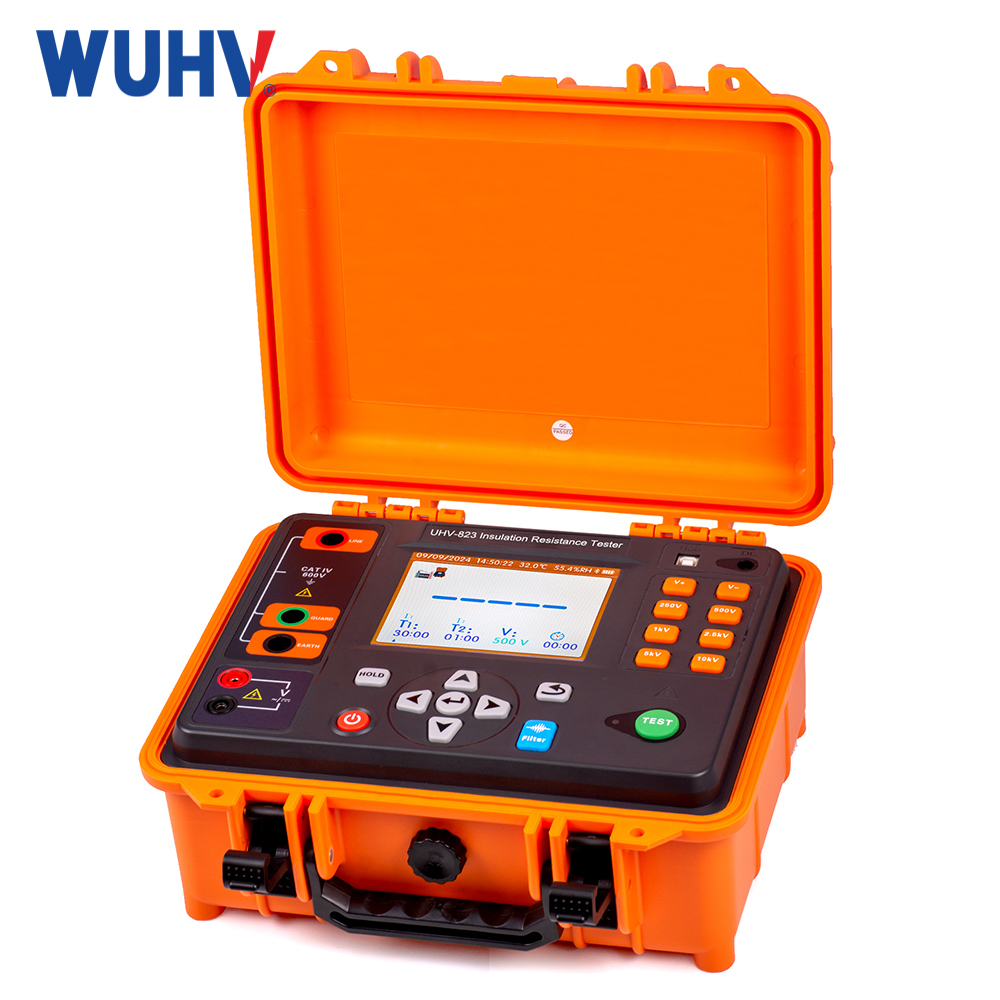
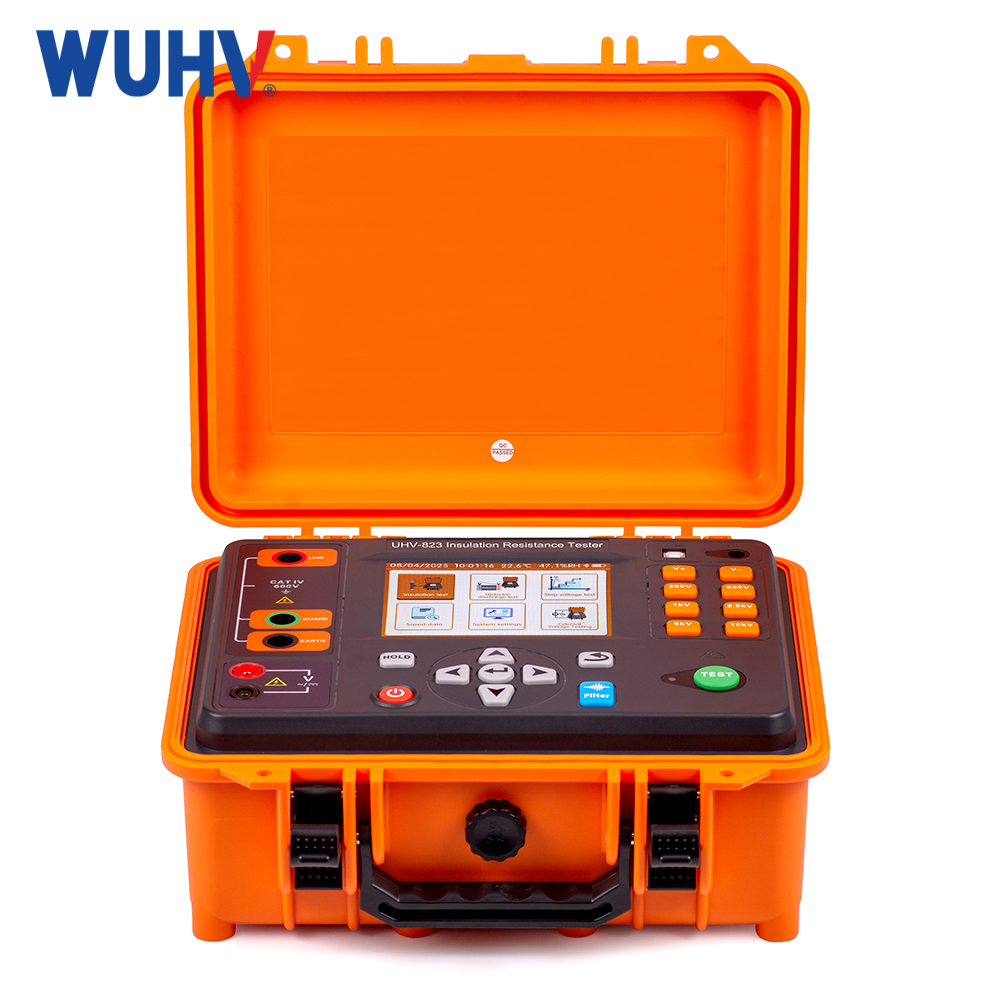
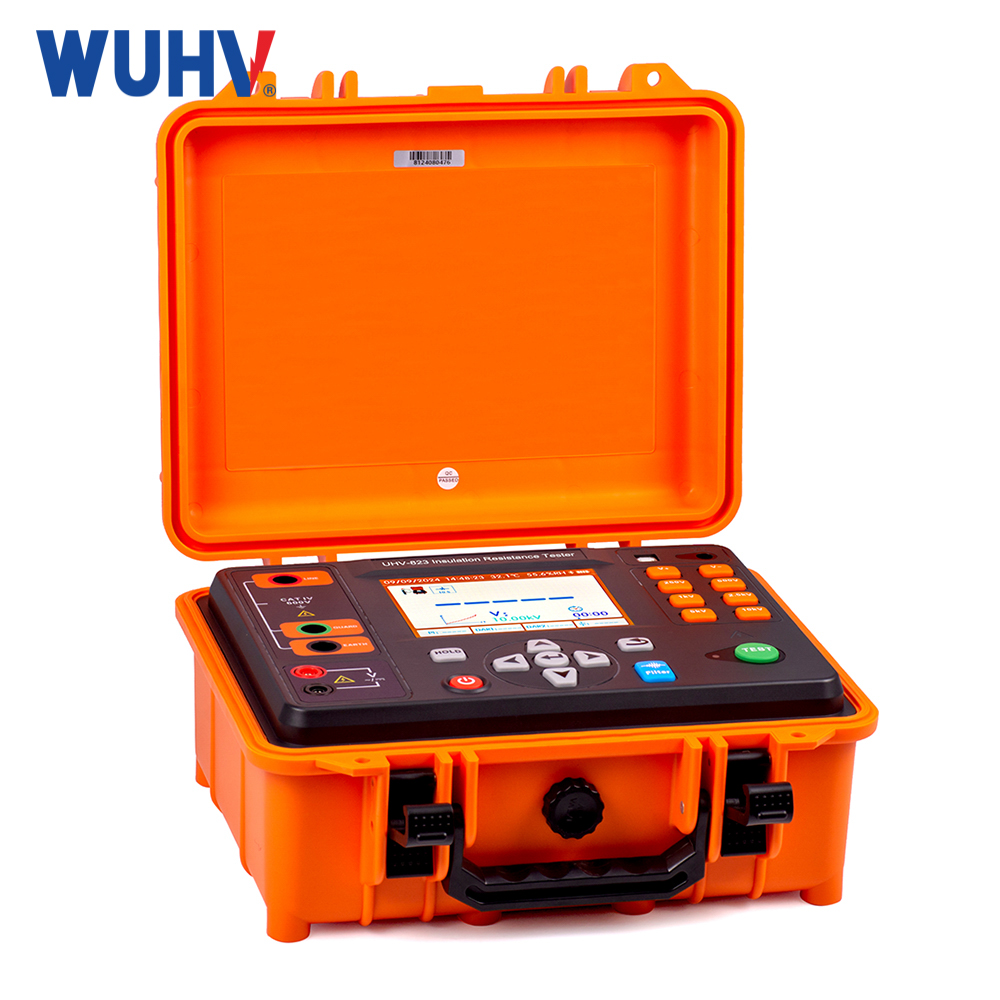
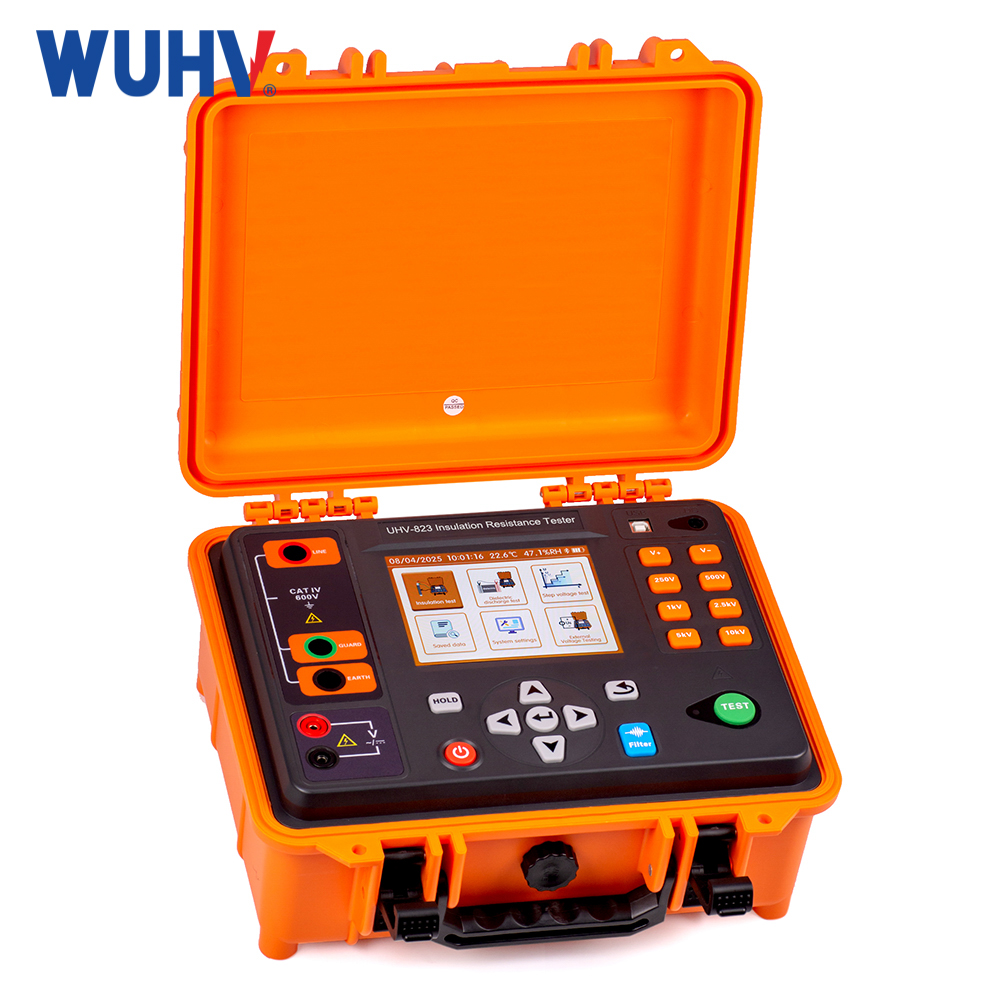
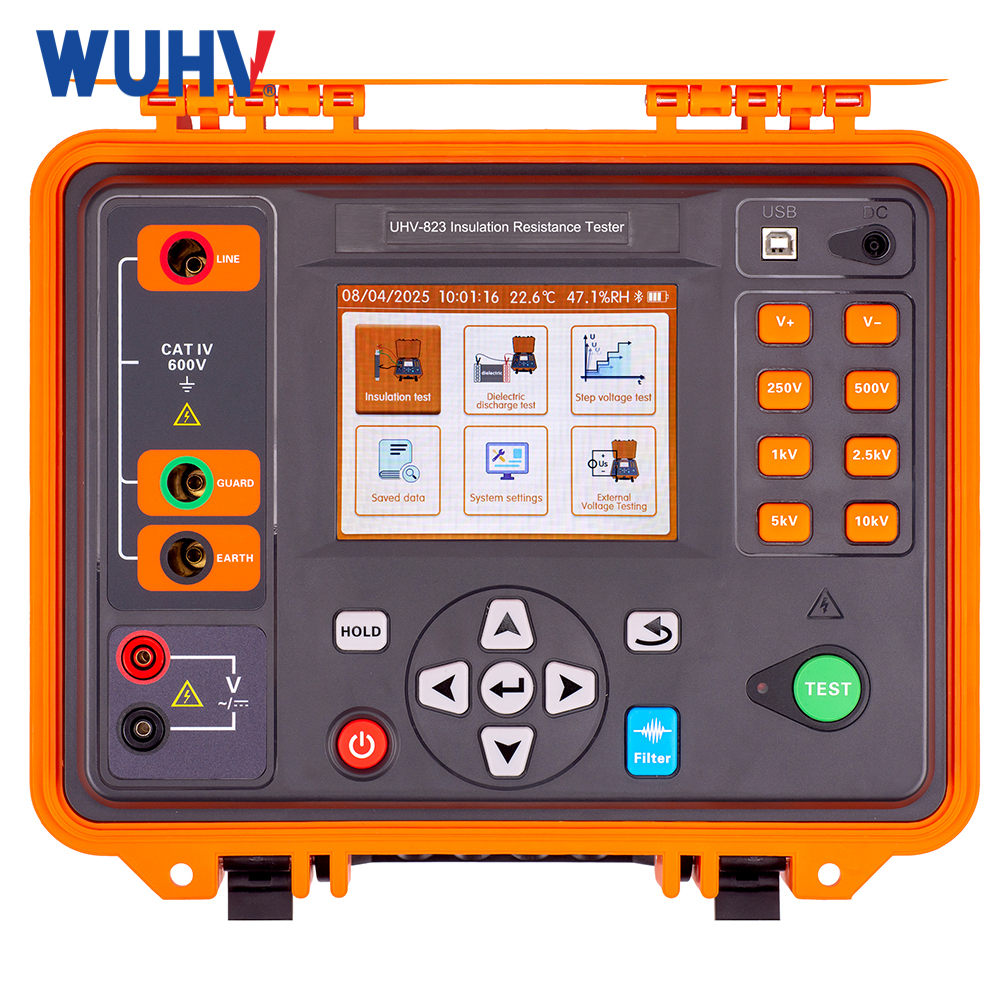
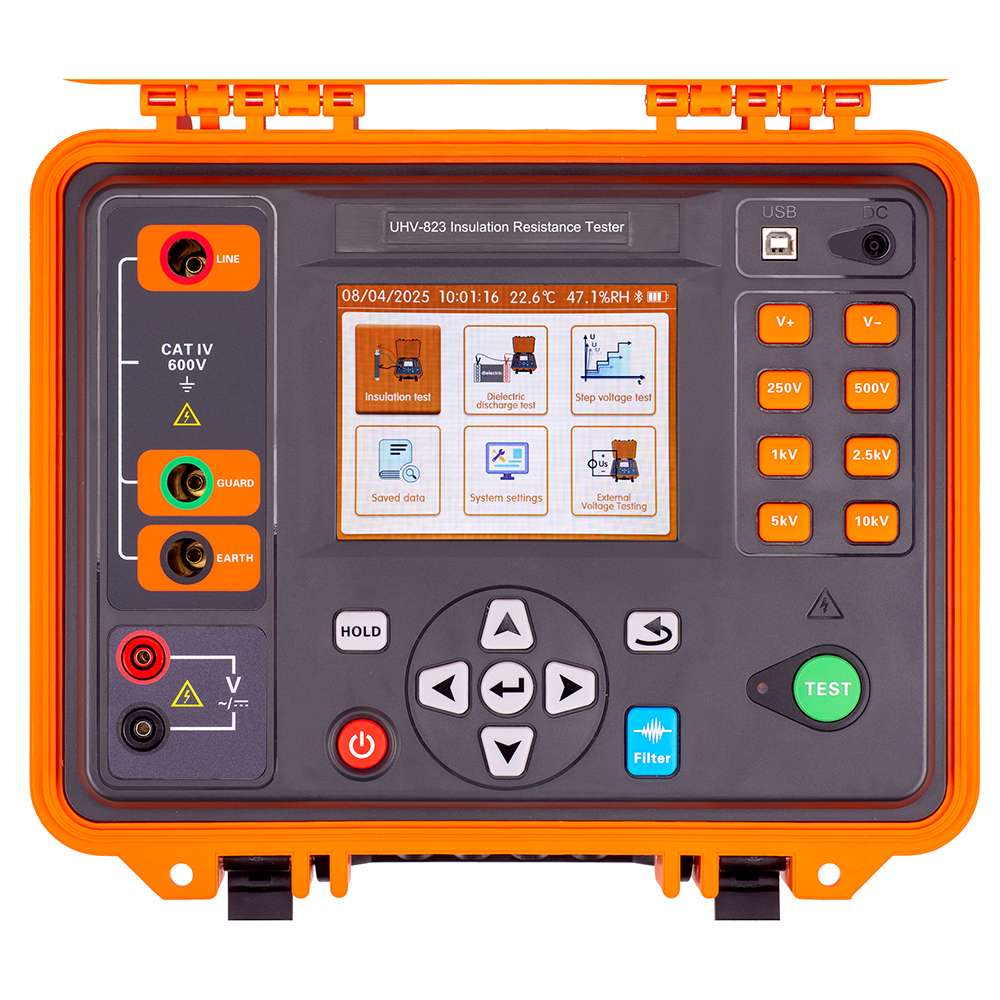
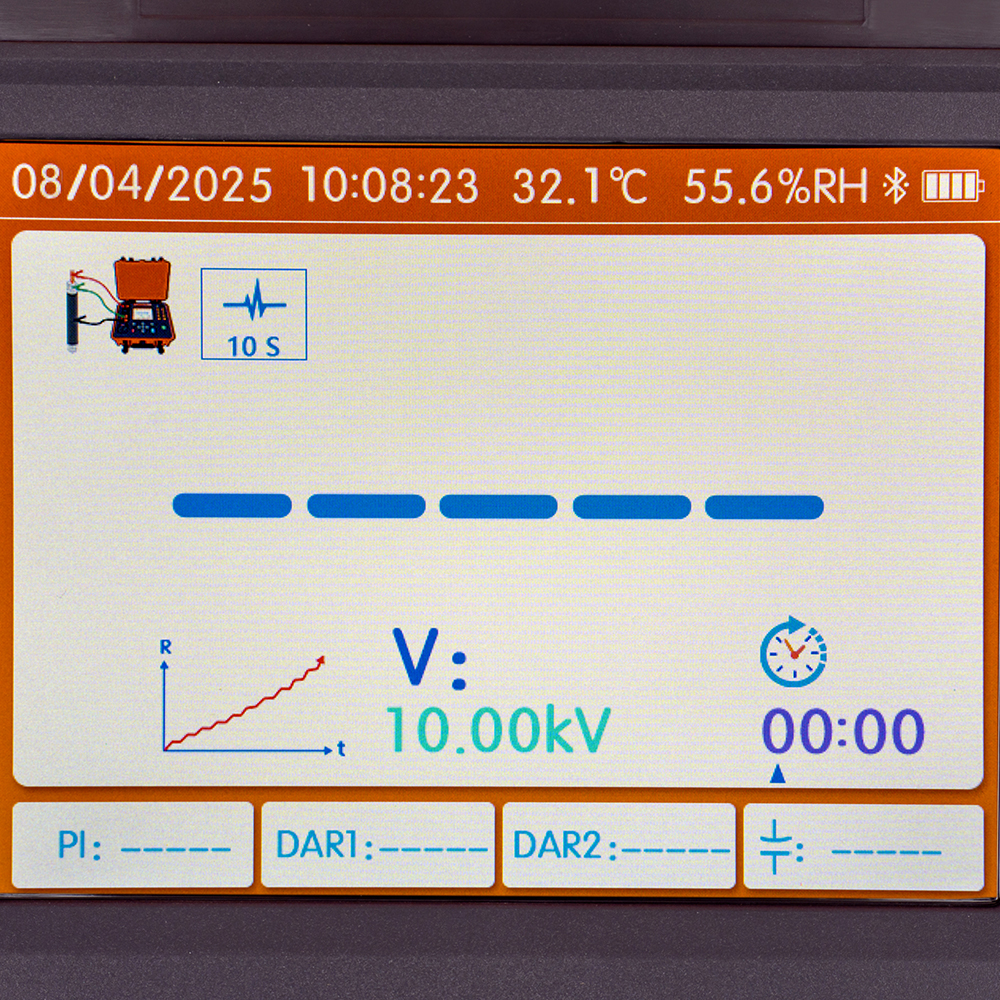
Insulation Resistance Tester features a high-voltage measurement system with multiple test modes, including dielectric discharge, external voltage, and step voltage tests. The rugged, dust/water-resistant design incorporates a 5.6" color LCD with bilingual interface (Chinese/English), micro-current measurement, and automatic discharge. With 0.01MΩ resolution, Bluetooth-enabled mobile app (data/GPS/photo uploads), and three-wire measurement (including guard terminal for leakage current elimination), it ensures accurate insulation testing in power, telecom, industrial, and educational applications.
Key advantages include:
Shock/dust/moisture resistant construction
Product Characteristics
1、The instrument adopts a double shell design, built-in 5.6 inch color LCD can display the test results, bilingual operation interface in Chinese and English, simple button design so that users do not have to spend a long time to get familiar with the instrument, but also has data storage, data access, data retention, data transmission and other functions.
2、The instrument has the advantages of high resolution, convenient operation, convenient carrying, accurate, reliable, stable performance and strong anti-interference ability.
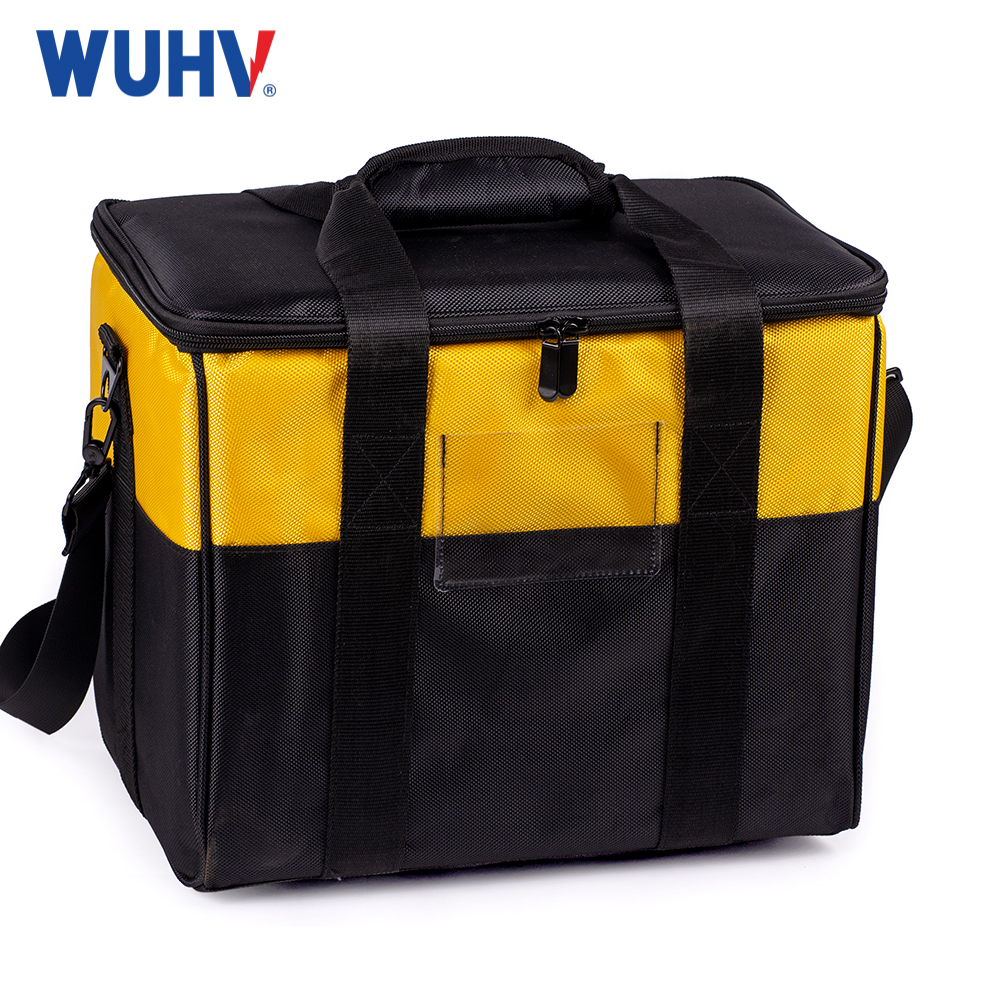
3、With shock-proof, dust-proof and moisture-proof structure, it is a commonly used and essential instrument for telecommunications, electric power, meteorology, computer rooms, oil fields, mechanical and electrical installation and maintenance, and industrial enterprise sectors that use electricity as industrial power or energy.
4、The instrument is composed of medium and large scale integrated circuit, including high precision micro current measurement system, digital boost system, automatic discharge circuit.
5、Simple connection, only a high voltage line and a signal line to connect the measured object can be measured. In order to eliminate the leakage current generated during the test process, it is necessary to connect the shielding line of the green port, which can effectively reduce the measurement error caused by the test process.
6、The insulation resistance test is a qualitative test of whether the electrical insulation of the equipment is effective, and the measured parameters represent the effectiveness of the electrical insulation of the equipment.
7、It is suitable for measuring the resistance value of various insulation materials, sleeve insulation, transformer insulation, motor or generator insulation, cable and electrical equipment insulation resistance, in which the polarization index and absorption ratio obtained by the test can be used to judge the insulation moisture of the equipment under test.
|  |
• Industrial electrical maintenance
✓ Automatic discharge circuitry
Guard terminal (green port) for leakage current elimination
Determining polarization index and absorption ratio to detect moisture in insulation
Parametros del producto
Insulation resistance measurement range and accuracy
| Tensión de salida | Rango de medición | Precisión |
| 250V DC | 0.01MΩ~10.0GΩ | ±3%rdg±5dgt |
| 10.0GΩ~500GΩ | ±15%rdg±5dgt | |
| 500 VCC | 0.01MΩ~25.0GΩ | ±3%rdg±5dgt |
| 25.0GΩ~1.00TΩ | ±15%rdg±5dgt | |
| 1.00KV DC | 0.01MΩ~50.0GΩ | ±3%rdg±5dgt |
| 50.0GΩ~2.00TΩ | ±15%rdg±5dgt | |
| 2.50kV DC | 0.01MΩ~100GΩ | ±3%rdg±5dgt |
| 100GΩ~5.00TΩ | ±15%rdg±5dgt | |
| 5.0kV DC | 0.01MΩ~200GΩ | ±3%rdg±5dgt |
| 200GΩ~10.0TΩ | ±15%rdg±5dgt | |
| 10.0kV DC | 0.01MΩ~400GΩ | ±5%rdg±5dgt |
| 400GΩ~20.0TΩ | ±20%rdg±5dgt |
AC and DC voltage range and accuracy
| Project | Rango de medición | Precisión |
| AC voltage | 1V~1000V 50/60Hz | ±2%rdg±5dgt |
| DC voltage | 1V~1000V | ±2%rdg±5dgt |
General specification
| Function | Insulation resistance test, sample capacitance test, automatic calculation of polarization index and absorption ratio, automatic discharge function, filter function, clock function, external voltage test, stepping voltage test, dielectric discharge test | ||
| Fuerza | DC 14.8V 5200mAh rechargeable lithium battery, battery full of about 16.8V | ||
| Test voltage | Setting range: 250V, 500V, 1000V, 2500V, 5000V, 10kV | ||
| Corriente de cortocircuito | ≥5mA | ||
| Wiring method | L Terminal: "L" is called the high voltage output end, called the line end, which is led to one end of the measured object | ||
| G terminal: "G" is called the shield end, used for the three-electrode method to measure the insulation resistance of the insulation material or cable, it is connected to the electrode protection ring end. | |||
| E Terminal: "E" is called the ground end and is connected to the ground and zero end of the object to be measured. For example, motor shell metal, transformer core, cable shielding layer | |||
| Rango de tiempo | Max. 99 min. 99 SEC. (Depending on measurement method, can be set by yourself) | ||
| Maximum resolution | Insulation resistance: 0.01MΩ | ||
| Capacitance: 0.001μF | |||
| Capacitance test | Measuring range: 0.200μF~100.0μF | ||
| Accuracy: ±20%±0.005μF | |||
| Stepping voltage | 100V~1.00kV, step by 10V; | ||
| 2.50kV~10.00kV, alternately step 20V, 30V | |||
| Backlight | Brightness Settings You can set high, medium, and low brightness | ||
| Voltage gear | Press the button to set the gear | ||
| LCD | 5.6 inch color LCD | ||
| Measurement indication | In the measurement, the LED indicator flashes and the alarm sound indicates "beep" | ||
| Charge indication | The indicator on the charger lights up red when charging and green when full | ||
| Out of range prompt | --OL-- | ||
| Almacenamiento de datos | After the test is completed, the data is automatically stored, which can store 1000 pieces of data. The data storage includes the current test data, environmental temperature, date and time and other information | ||
| Data read | Home screen key Select the record query function and press the up, down, left and right arrow keys to view data | ||
| Automatic shutdown | In the use of battery power supply, power on no operation for about 15 minutes after the automatic shutdown | ||
| Standard test line | Red high pressure rod, green, black with clip test wire each | ||
| Battery voltage | Real-time display of battery remaining power, low power, please charge in time; During low power, the meter cannot output voltage for testing | ||
| Date | The top bar of the meter LCD screen displays the date of the current setting | ||
| Temperatura ambiente | The top bar of the meter LCD screen displays the current ambient temperature | ||
| Meter size | The length, width and height are 320mm x 240mm x 145mm | ||
| Instrument quality | About 3.5kg(including battery) | ||
| Data transmission | Data can be exported via USB cable | ||
| Communication interface | USB interface, stored data can be uploaded to the computer, save and print | ||
| USB interface | With USB interface, software monitoring, stored data can be uploaded to the computer, save and print | ||
| Cloud service | Android APP, Bluetooth connection; Upload on-site pictures, upload test data, generate test reports, generate data curves, and view data at the same time | ||
| Communication line | One USB communication cable, 1.5m long | ||
| Operating temperature and humidity | -10℃ ~ 40℃; No condensation below 80%rh | ||
| Storage temperature and humidity | -20℃ ~ 60℃; Does not condense below 70%rh | ||
| Compression resistance | Between the upper cover and the lower cover AC 5kV 50Hz withstand 1min | ||
| Electromagnetic characteristic | IEC61326(EMC) | ||
| Fit for safety | CAT IV 600V | ||
Application Scenarios
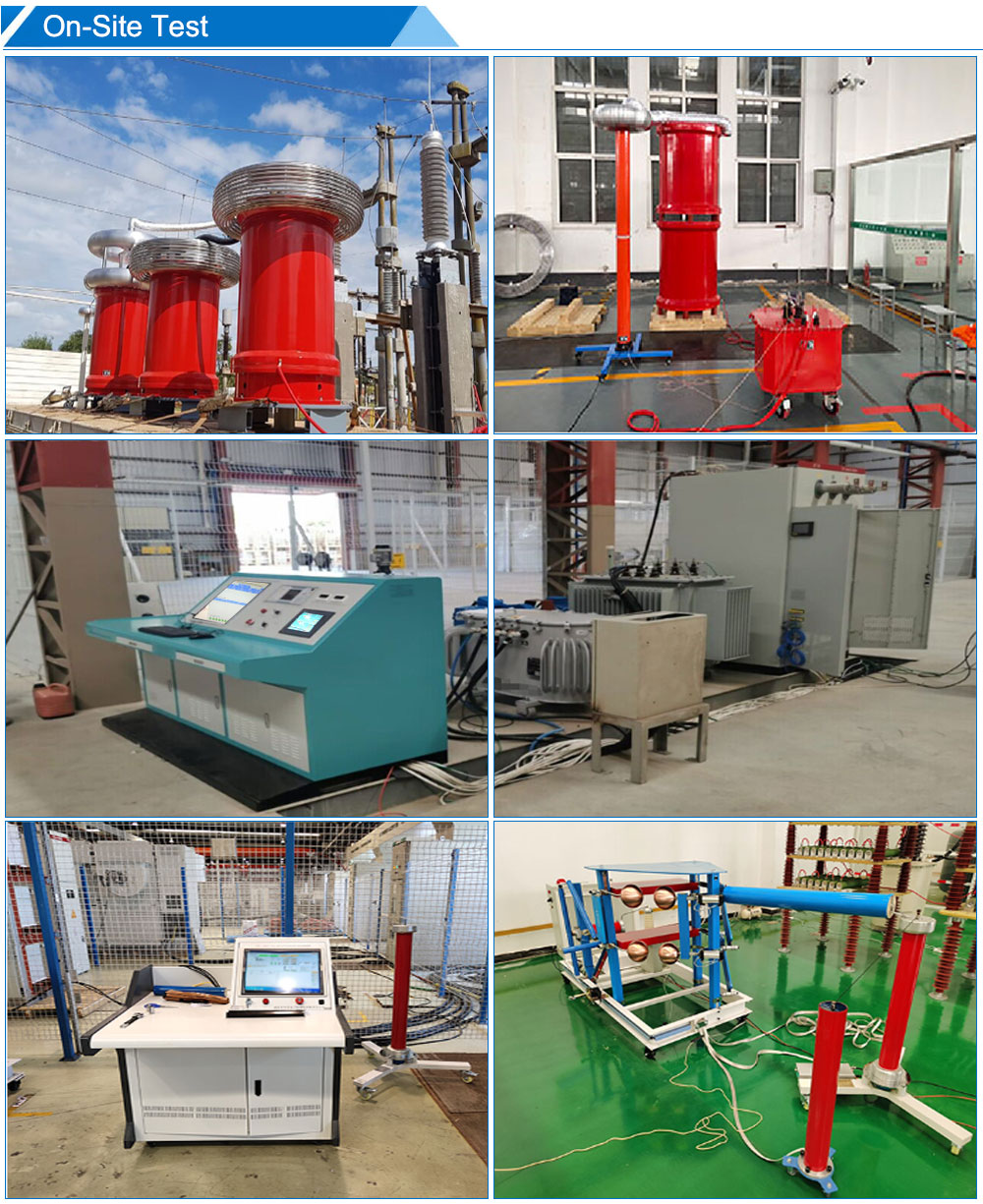
Power Cable Testing
Insulation resistance testers are widely used in the installation acceptance, routine maintenance, and fault diagnosis of medium- and low-voltage as well as high-voltage power cables. By measuring the insulation resistance between conductor and ground, and between conductors, issues such as insulation aging, moisture ingress, or mechanical damage can be promptly identified, ensuring the safe and stable operation of transmission and distribution systems.
Typical applications:
Newly laid cable acceptance
Periodic cable inspection
Post-repair cable testing
Underground cable maintenance
Motor & Generator Maintenance
After long-term operation of industrial motors and generators, winding insulation tends to degrade due to high temperatures, moisture, or contamination. Insulation resistance testers can quickly assess the insulation condition of windings, providing a reliable basis for equipment maintenance and preventive upkeep.
Typical applications:
Factory equipment maintenance
Power plant equipment testing
Pre- and post-repair motor testing
Predictive maintenance
Transformer Testing
Transformers are critical equipment in power systems, and their insulation performance directly affects operational safety. Insulation resistance testers can be used to test winding-to-ground and inter-winding insulation, helping to determine whether insulation is affected by moisture, aging, or defects.
Typical applications:
Distribution transformers
Power transformers
Dry-type transformers
Oil-immersed transformers
Switchgear & Distribution Equipment Testing
During installation and maintenance of switchgear, circuit breakers, and distribution cabinets, insulation resistance testing is an essential inspection item. Testing verifies the insulation integrity of the equipment and reduces the risk of short circuits and leakage.
Typical applications:
High- and low-voltage distribution cabinets
Ring main units (RMU)
Vacuum circuit breakers
Switchgear maintenance
Renewable Energy Systems Testing
With the rapid development of photovoltaic, wind power, and energy storage systems, insulation resistance testing has become an important part of installation and operation and maintenance of renewable energy equipment. Regular testing ensures long-term stable system operation and improves power generation efficiency.
Typical applications:
PV modules and photovoltaic cables
PV inverters
Wind turbine generators
Battery energy storage systems
Electric vehicle charging stations
Manufacturing Quality Control
Equipment manufacturers typically perform insulation resistance testing before product delivery to verify that products comply with relevant international standards and quality requirements, ensuring that equipment delivered to customers is safe and reliable.
Typical applications:
Motor manufacturing
Cable manufacturing
Electrical product production
Control panel assembly
Home appliance manufacturing
Building Electrical Installation Acceptance
After completion of construction projects, insulation testing of the power supply and distribution system is required to ensure that wiring and equipment meet safety standards and to prevent hazards such as leakage and short circuits.
Typical applications:
Commercial buildings
Residential projects
Hospitals
Schools
Data centers
FAQs
What is an insulation resistance tester used for?
An insulation resistance tester is used to measure the insulation resistance of electrical equipment, cables, motors, transformers, switchgear, and other electrical systems. It helps identify insulation deterioration before electrical failures occur.
Which industries use insulation resistance testers?
Insulation resistance testers are widely used in:
Power industry
Electrical installation engineering
Manufacturing plants
New energy industry (photovoltaic, wind power)
Railway transportation
Mining
Oil and natural gas
Building facility maintenance
HVAC (Heating, Ventilation, and Air Conditioning)
Why may insulation resistance values measured at different test voltages vary?
Different test voltages exert varying degrees of electric field stress on the insulating material, which may result in different measurement results. For high-voltage equipment, it is generally necessary to select the specified test voltage in accordance with relevant standards, in order to obtain more meaningful reference data and ensure comparability of test results across different times and equipment.
Why may insulation resistance values measured at different test voltages vary?
Different test voltages exert varying degrees of electric field stress on the insulating material, which may result in different measurement results. For high-voltage equipment, it is generally necessary to select the specified test voltage in accordance with relevant standards, in order to obtain more meaningful reference data and ensure comparability of test results across different times and equipment.
Why Choose Our Insulation Resistance Tester?
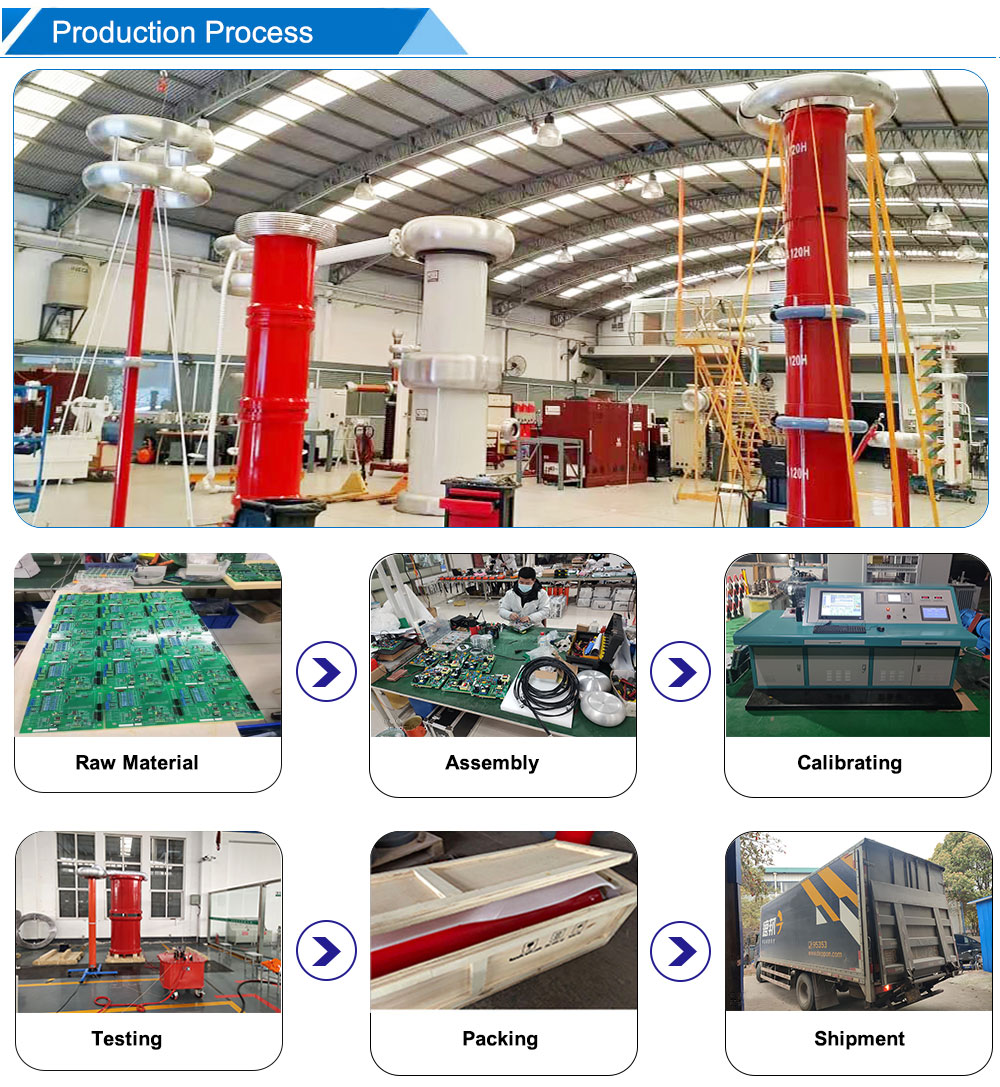
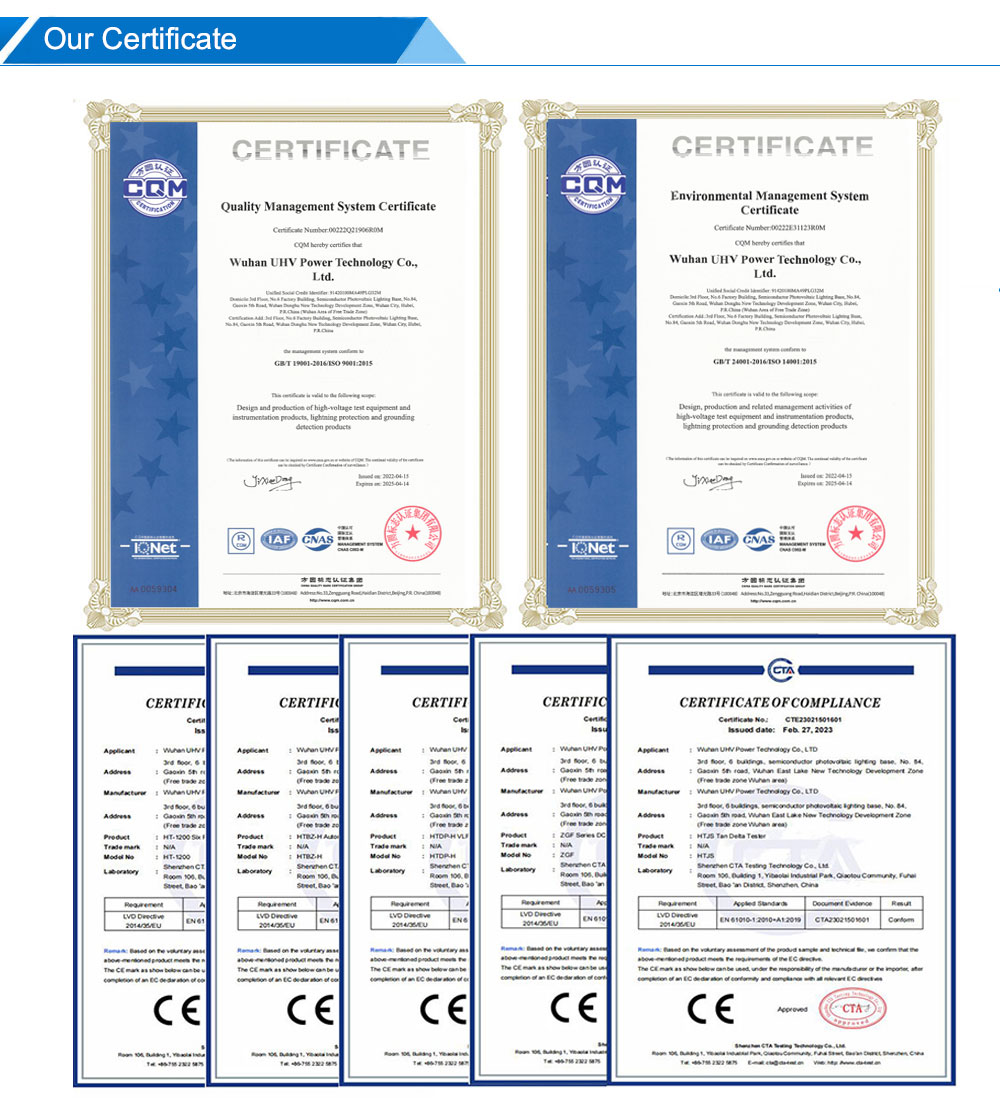
We have our own factory with over 10 years of production experience.Our insulation resistance tester is designed to provide reliable, accurate, and efficient insulation testing for a wide range of electrical equipment and applications. With test voltages from 250V to 10kV DC and a maximum insulation resistance measurement range of up to 20TΩ, it is suitable for testing cables, motors, transformers, switchgear, generators, photovoltaic systems, and other high-voltage electrical equipment.